One of hubs’ brothers (Dan – the one hubs was closest to) passed this spring, shortly after we returned home from Texas.
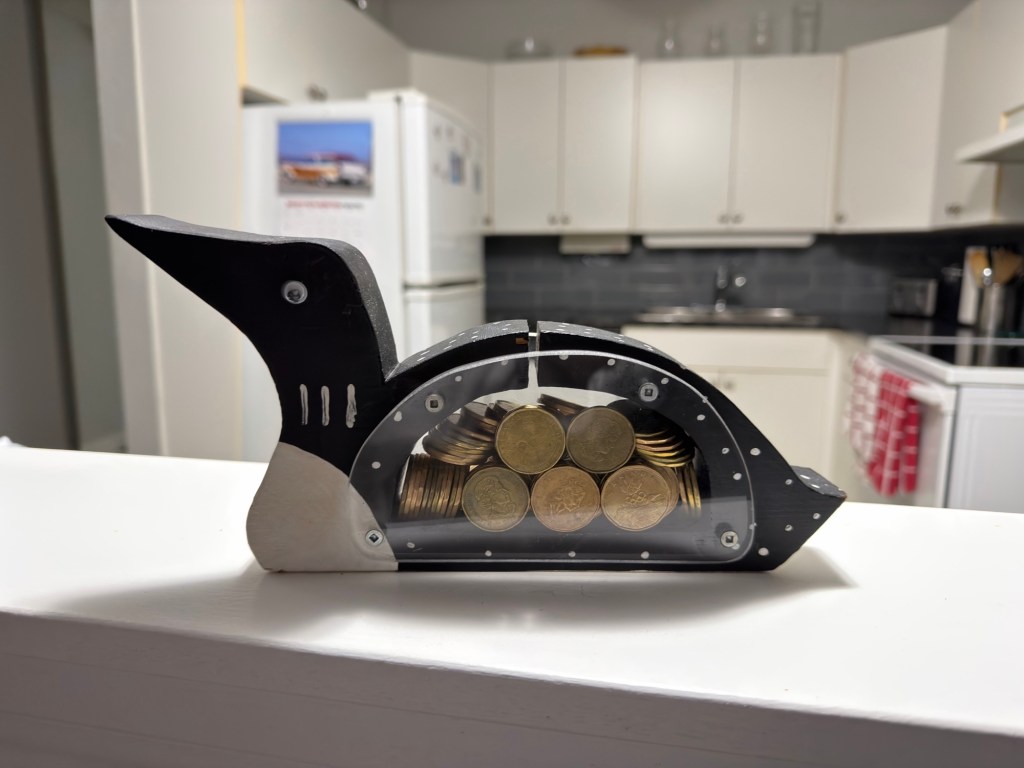
Dan had purchased this loonie bank at a Ducks Unlimited event. The bank itself is a loon and the coin slot is made for loonies (Canada’s nickname for our dollar coin)
His kids gave this bank to hubs as a remembrance.
As I face the pending loss of one of my sisters, I look at the bank sitting on the ledge near my armchair and am reminded of hubs’ loss a few months ago.
Our daughter was raised in a small town until she was five, and following that, in a small prairie city.
The only exposure she ever had to farm life was during her first five years when hubs would help my aunt and uncle with harvest on their south Saskatchewan grain farm, and I’d take her out to visit for a few days.
After her first marriage ended, she held out on committing again for many years. Hubs often said to her, “Marry a farmer”.
Three years ago, she took her dad up on his suggestion and married a grain farmer. She has embraced the lifestyle and is the most content and happiest that we’ve ever seen her.
Last week, we drove up for a visit and it was the perfect time to be there.
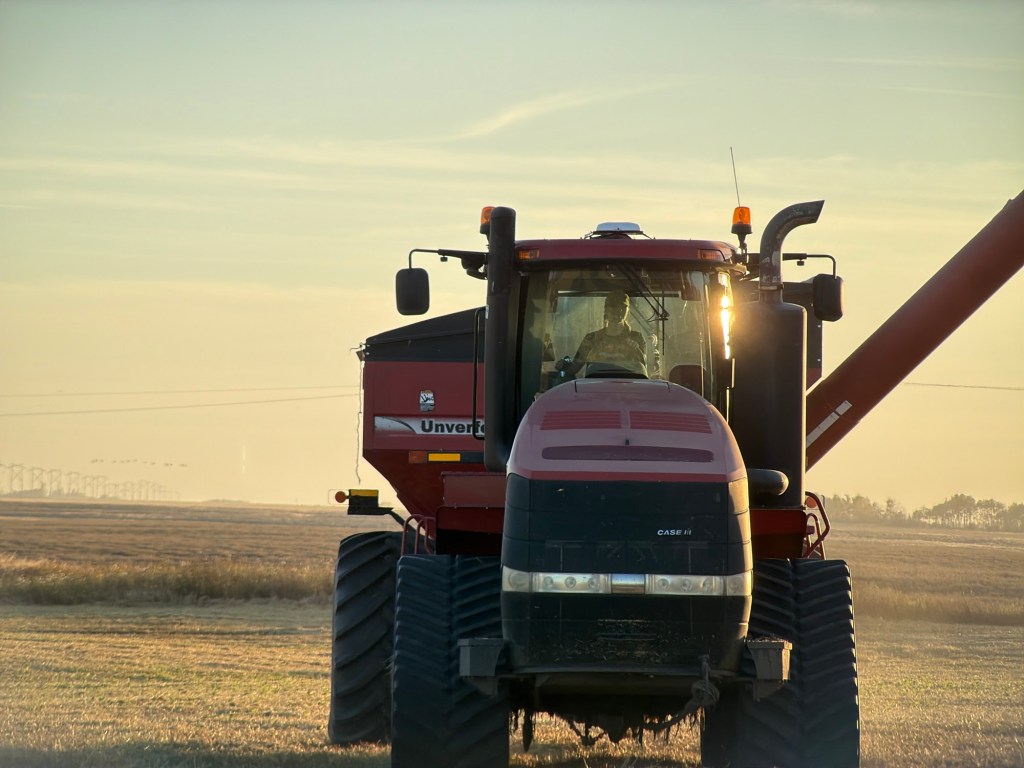
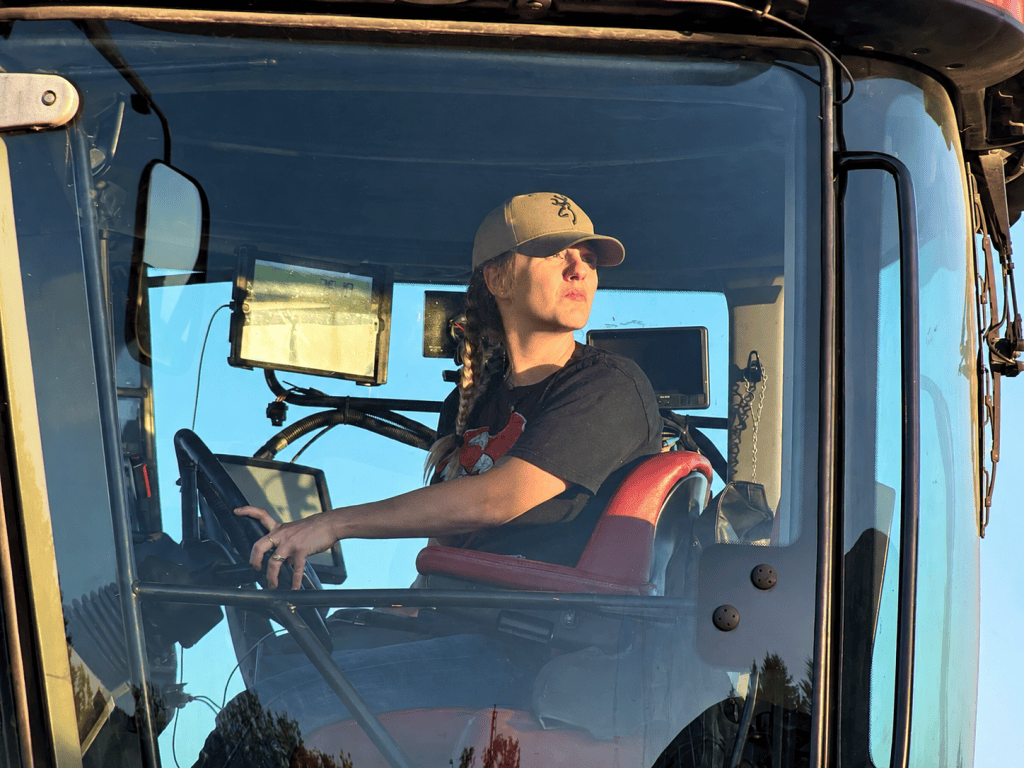
Harvest was finally in full swing and our daughter was driving grain cart for the first time ever. She had recently resigned from her full time day job in order to become more involved in the farming operation.
Hubs’ younger years (until he was 13) revolved around farming. After his dad sold the family farm, hubs had a few years in his adult life where he was able to help friends and family at seeding and harvest time.
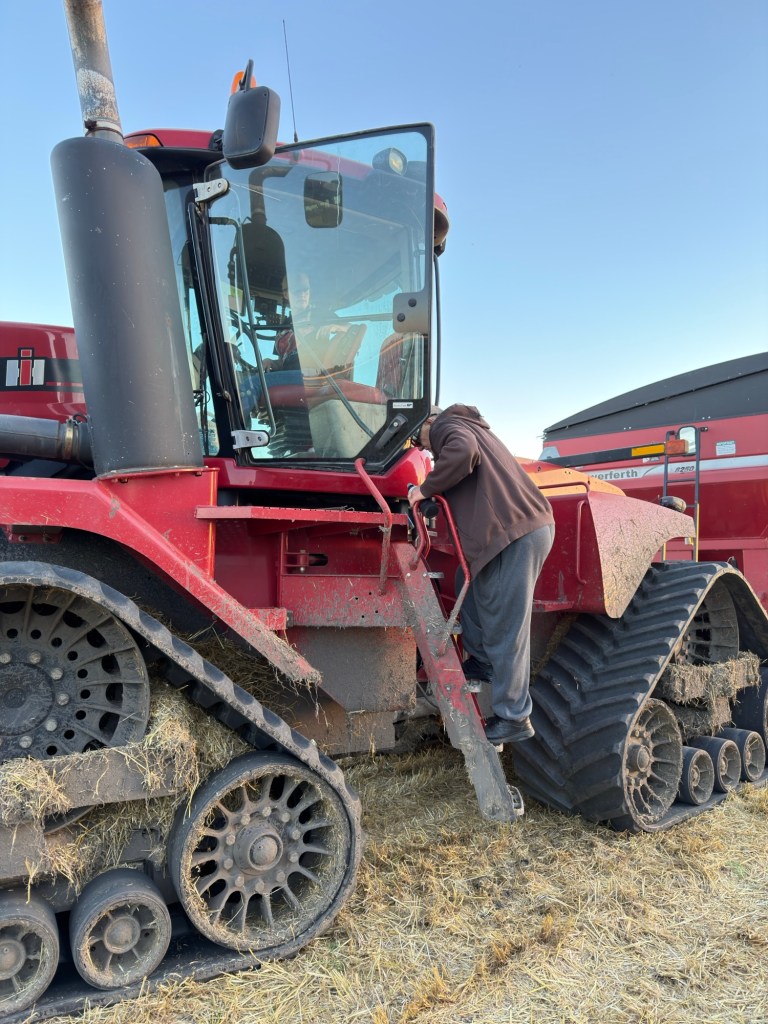
His thrill last week was being able to climb up into the tractor with our daughter and make a few rounds.
My thrill was seeing the two of them together doing what they both love.
My other thrill was using my new 240mm mobile tele lens for iPhone to get some shots of harvest in progress without me having to venture into the fields.
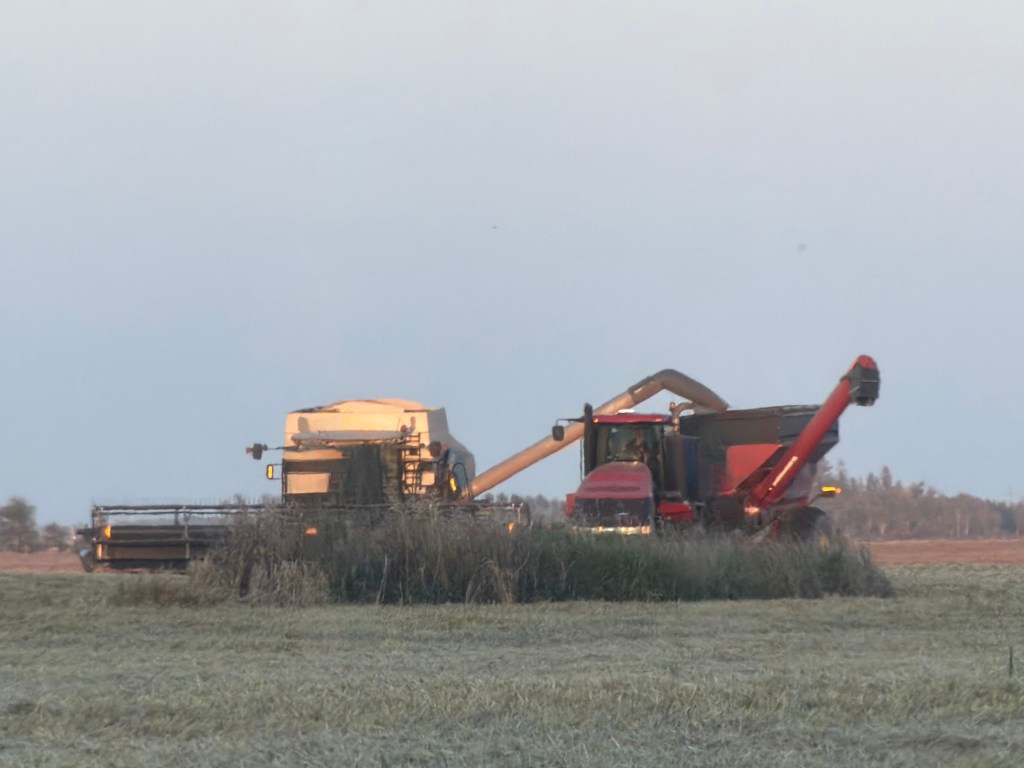
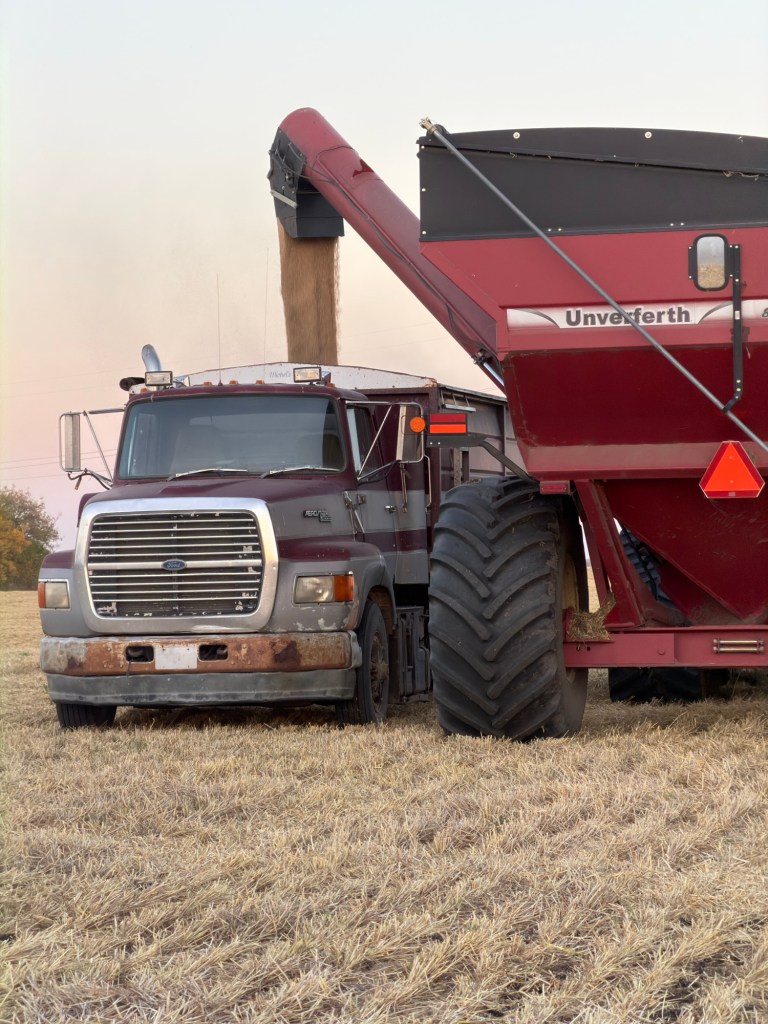
My feature photo is of our daughter bringing the tractor and grain cart to pick up her dad. I was a good distance away for that shot, as I was for these:
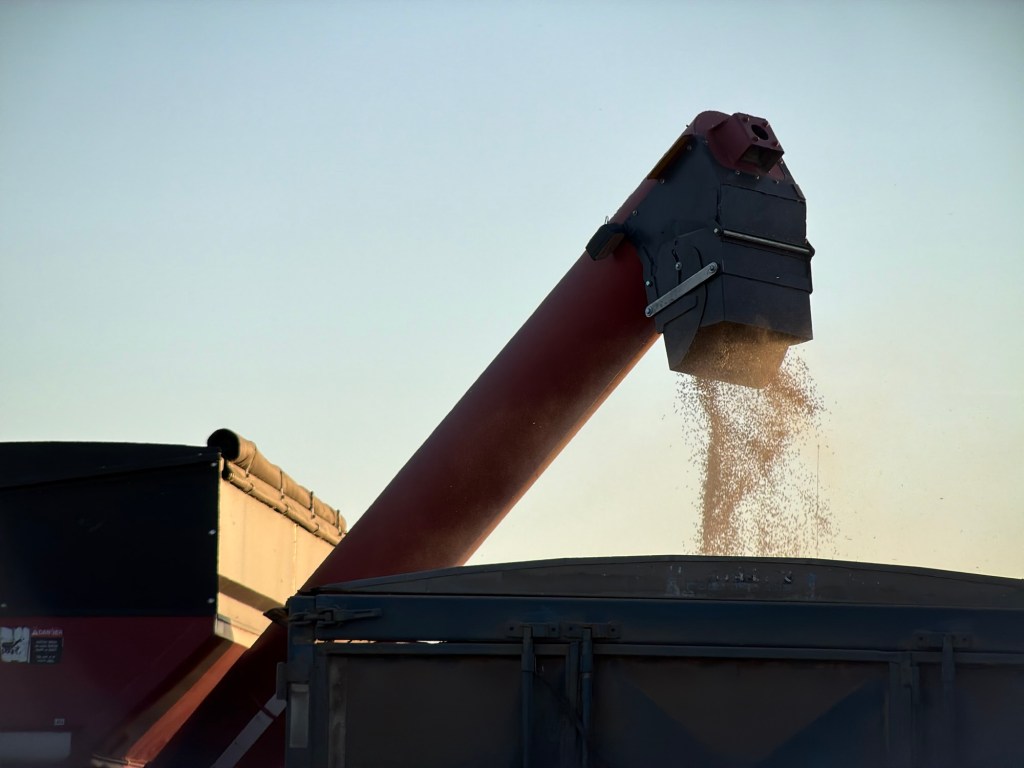
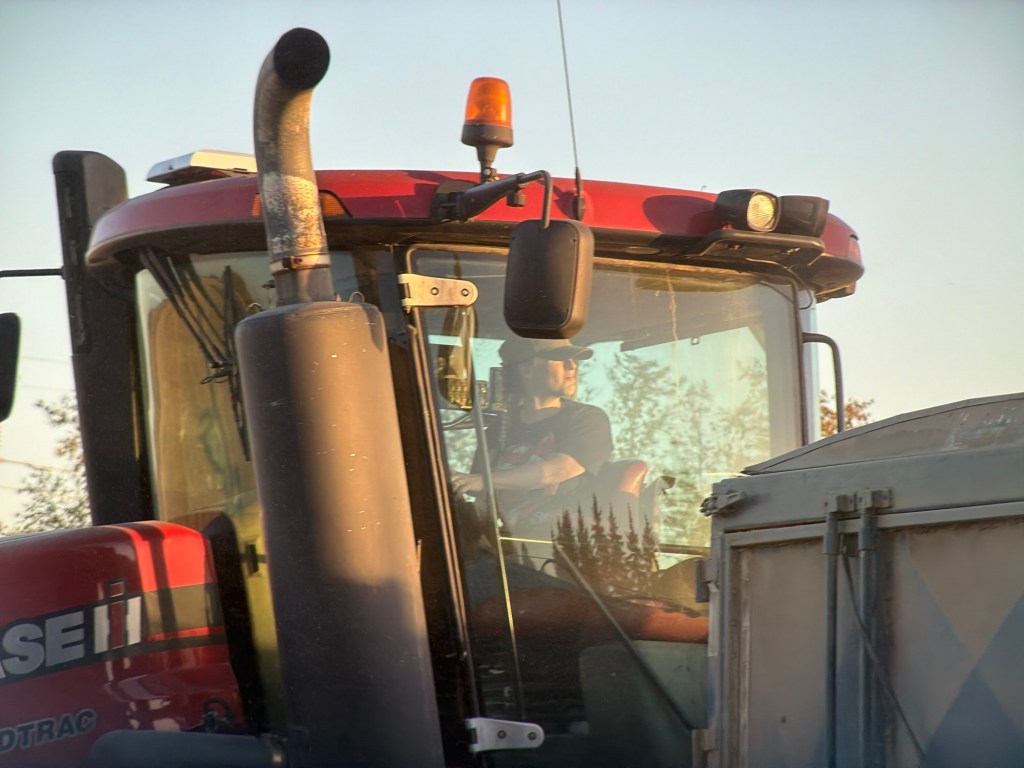
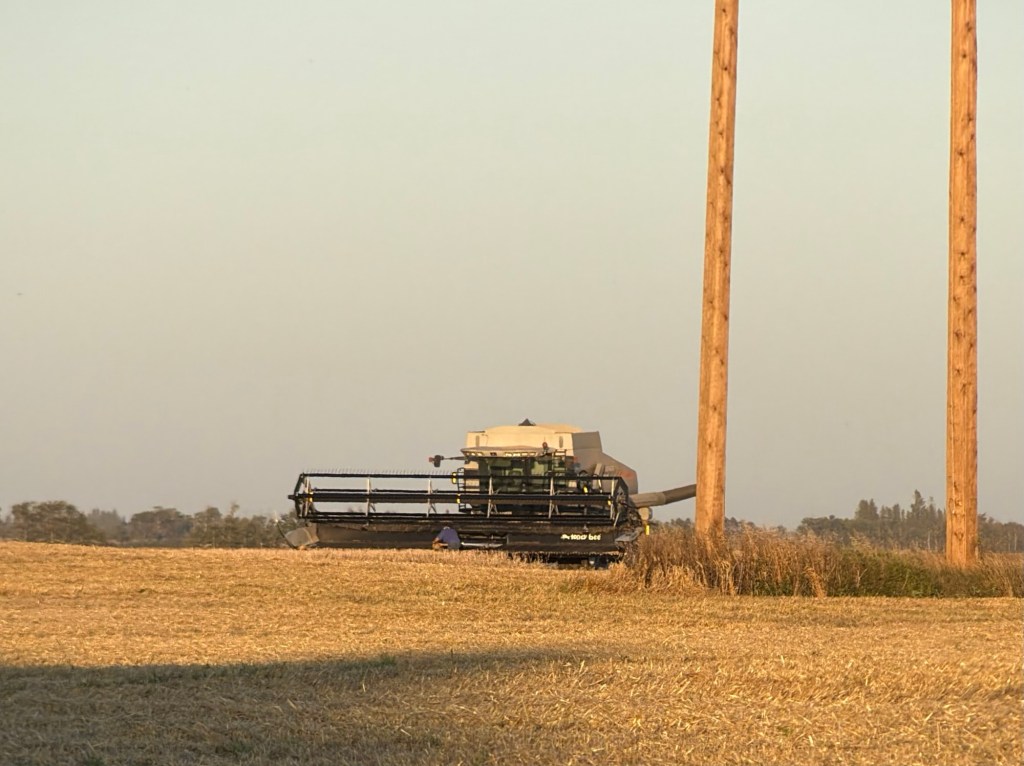
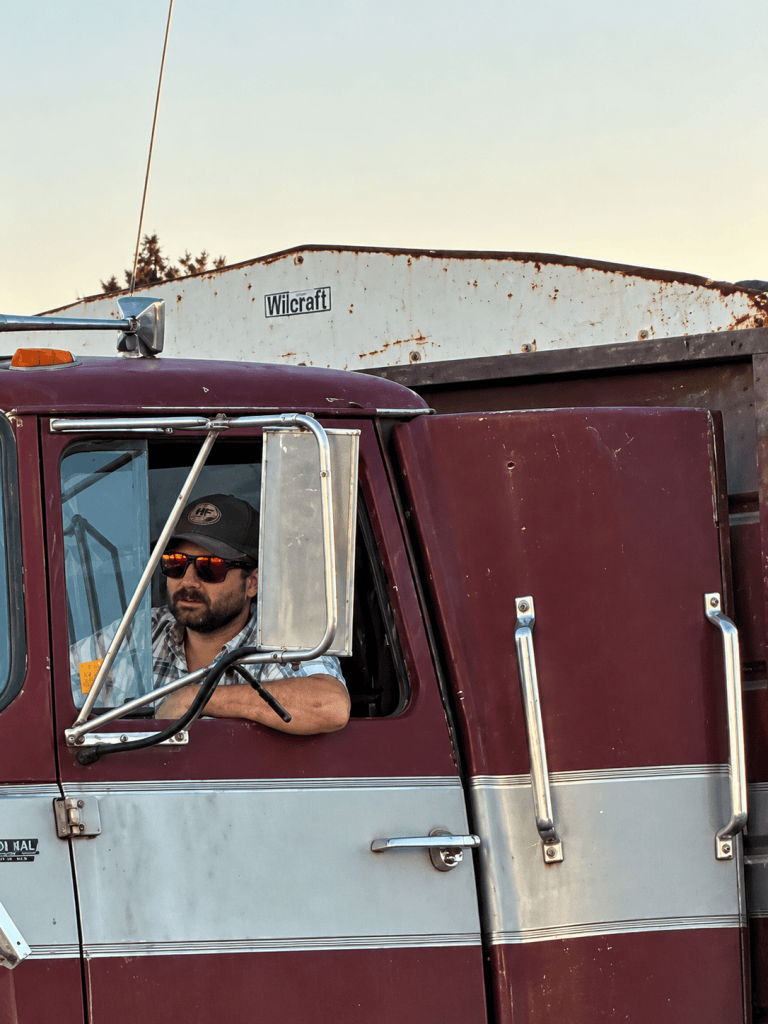
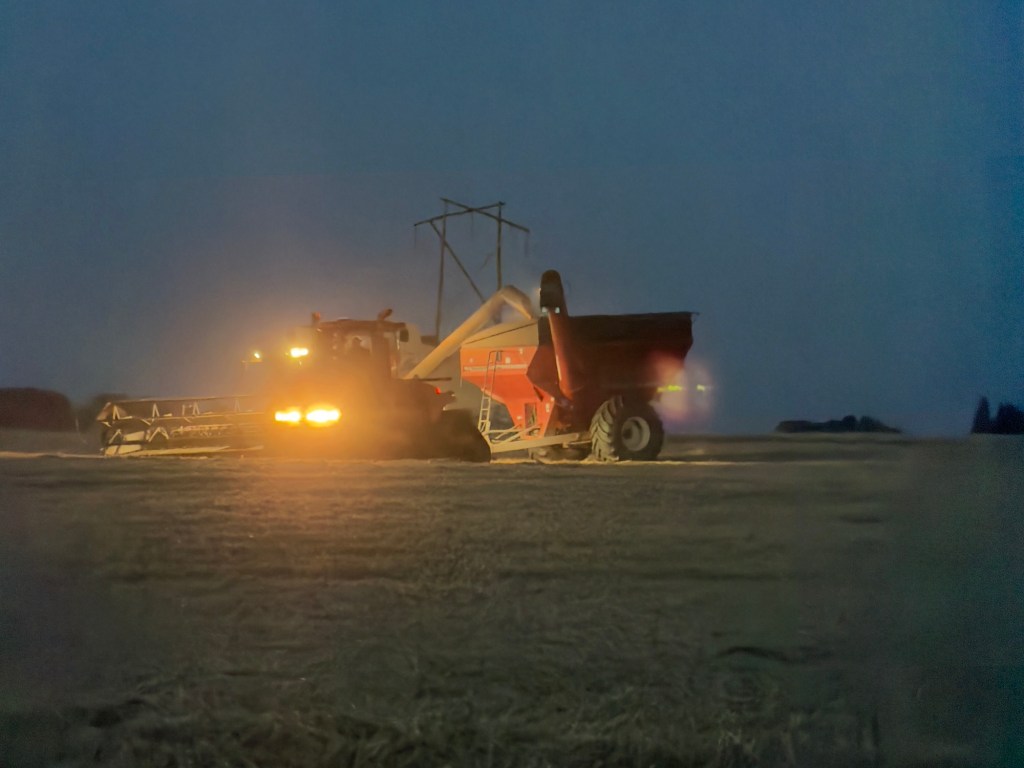
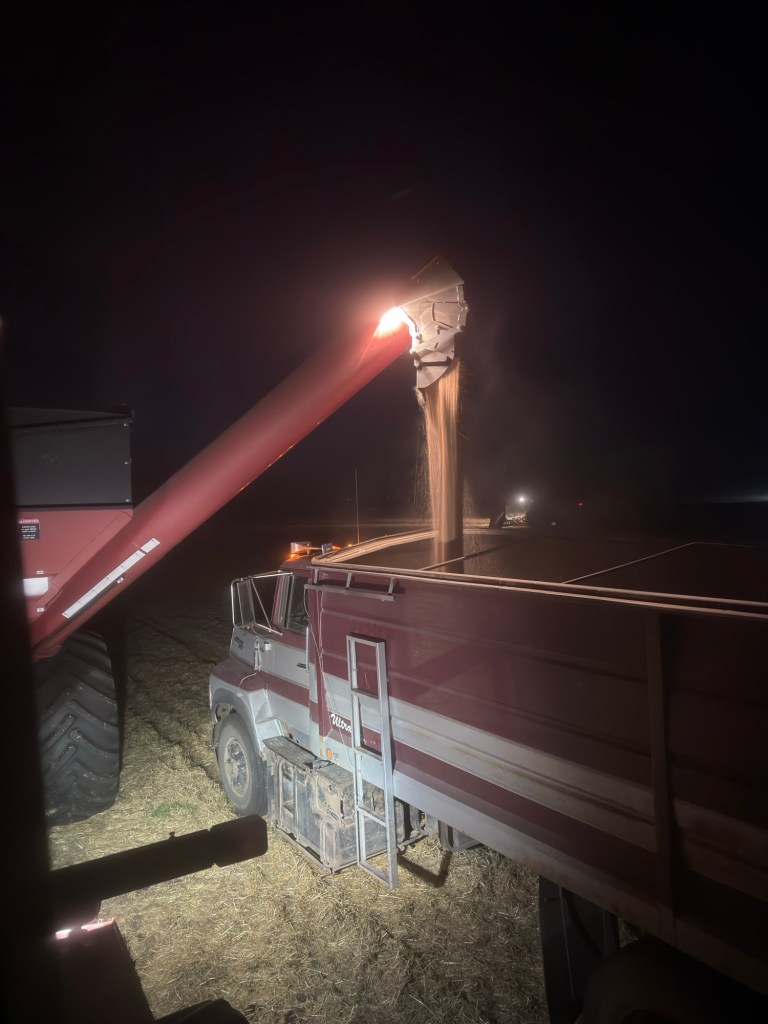
Barley from grain cart to truck Our girl The older combine Hubs climbing into the tractor Unloading the combine to the grain cartShe’s completely focusedOur son in law driving one of the grain trucksGrain truck being loaded from the grain cart
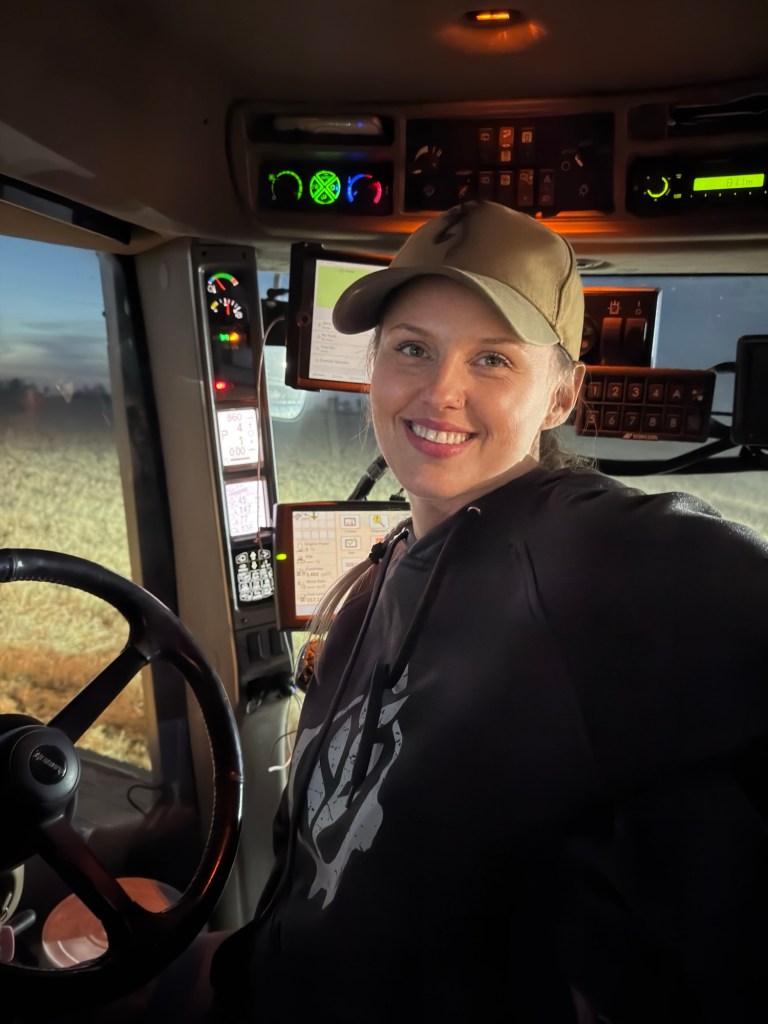
After hubs had his turn, I hopped in. My first time ever in a tractor! That’s an unusual statement from a small town prairie gal in her 73rd year.
I didn’t have the 240mm lens with me for my ride and that was ok because I was close enough to the action when I was in the tractor.
Our girl in her glory inside the tractor A typical nighttime scene in Saskatchewan at harvest timeAnother shot of the grain being augered
Last week, we travelled north to visit our daughter and her family as well as friends in the area we called home for over 20 years.
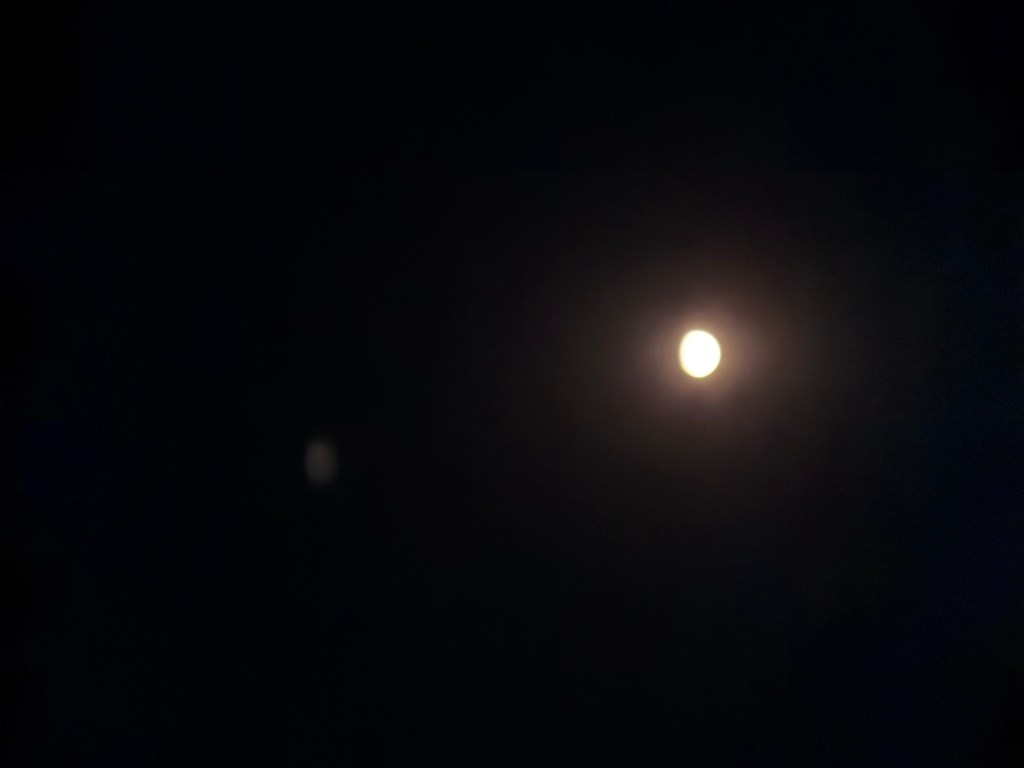
My feature photo is from Wednesday night at about 8pm. We were returning from a wonderful evening meal at a fave restaurant in a neighbouring town. Our daughter was driving and pulled over when I spotted the almost full moon and wanted a shot. I used the native camera app on my phone zoomed in at 8x. I didn’t have a tripod with me, so handheld wasn’t stable enough for the 8x, thus the slightly wobbly moon in my feature photo.
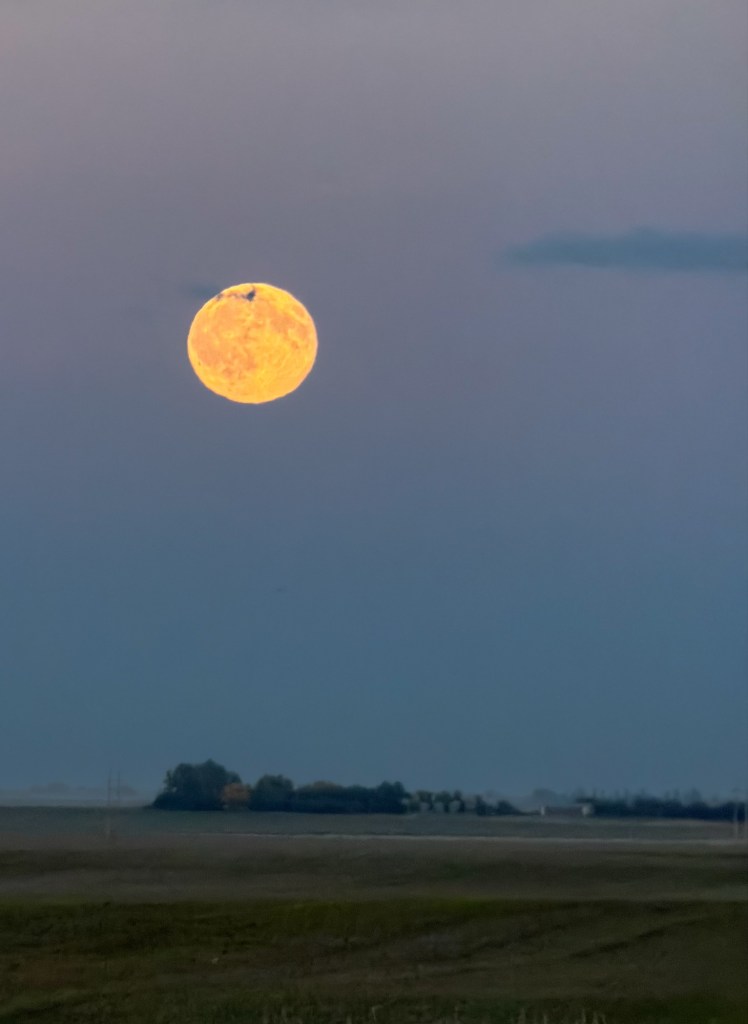
On Saturday, hubs and I were returning home, and as dusk arrived, I saw the big harvest moon rising over the horizon.
I pulled over to an approach, attached the new moment 240 mm mobile lens to my phone, shot using the 4x lens in my phone camera and the Moment Pro camera app, and voila!
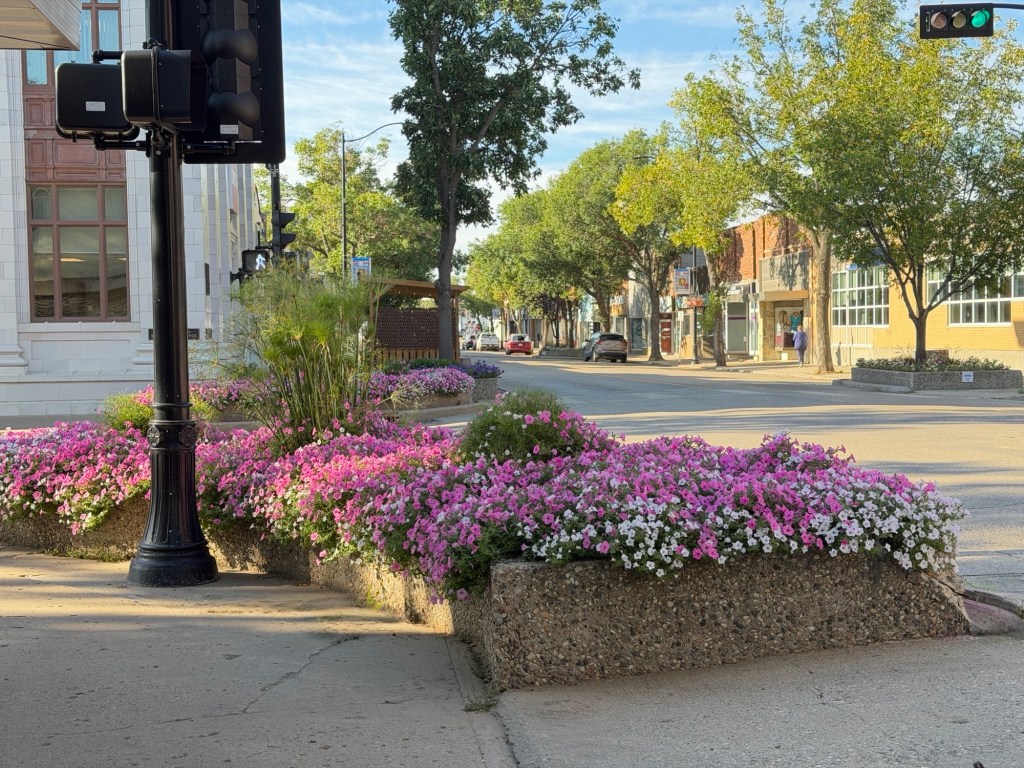
Some years back, our then mayor and city council decided on a downtown beautification project.
It involved pouring large cement flower planters every few feet along both sides of the street in the downtown area.
Community groups, businesses, and individuals sponsor the planters, and each group purchases the flowers and plants their individual planter. The city then looks after the watering. I’m not certain who does the weeding.
The planters do indeed beautify the downtown area.
Now, our current city council is allowing downtown restaurants to add outdoor seating areas in previous parking spaces.
The issue? Parking is extremely limited, and this is a great inconvenience for both the elderly and other physically challenged people. There are parking lots at the rear of some of the main street businesses, but not all. The banks have only front street entrances, so with limited parking in front, these are a challenge, especially in the winter.
Hindsight is 20-20 and sometimes foresight is completely blind.
When hubs and I entered full retirement life, we agreed on winters somewhere warm to get away from our harsh Canadian winters.
Having explored a few options while we were still working (vacations to Mexico and Arizona, a Caribbean cruise, and a 10 Day stay on Curaçao), we agreed on trying the RGV in South Texas.
Our first two winters there were with our motorhome and we completely lucked in to a park and community far beyond our expectations.
During our second season, we decided to purchase a mobile homein that park.
We have zero regrets … well, maybe just one.
Hubs’ health no longer justifies long stretches south of the 49’th parallel, so the mobile home purchase was maybe not such a great idea. The one truly special thing about the large mobile, is that we were able to house and entertain many family visitorsafter we bought it. Those special memories will last forever.
When he’s feeling up to it, we’ll make one last trip to the RGV to pack up our sentimental items to bring home, list our mobile for sale, and bid a sad farewell to the dear friends we’ve made there over the past seven years.
I’ll post updates as things progress – for now, suffice it to say… I’m OK … Sad, but OK.